Our Standard Harrison Workflow, Step by Step
When a property loss happens in Harrison, the workflow is the same as anywhere else our Newark crew dispatches. You call, a real human answers — no automated phone tree, no after-hours service that takes a message and hangs up. We get the address, the loss type, and any building access notes (gate codes, building management contacts, COI requirements) on that first call so the truck rolls toward your address with the right equipment for what we are walking into.
On active losses (burst supply lines, sewer backups, fire and smoke calls, wind-driven water intrusion), the standard is sub-hour arrival anywhere inside our coverage radius. The drive from our Newark location to Harrison is approximately 2 miles. Normal-traffic estimate: 10-20 minutes door-to-door. Pre-staged equipment during surge windows (winter freezes, named storms) keeps that arrival time consistent even on high-volume days.
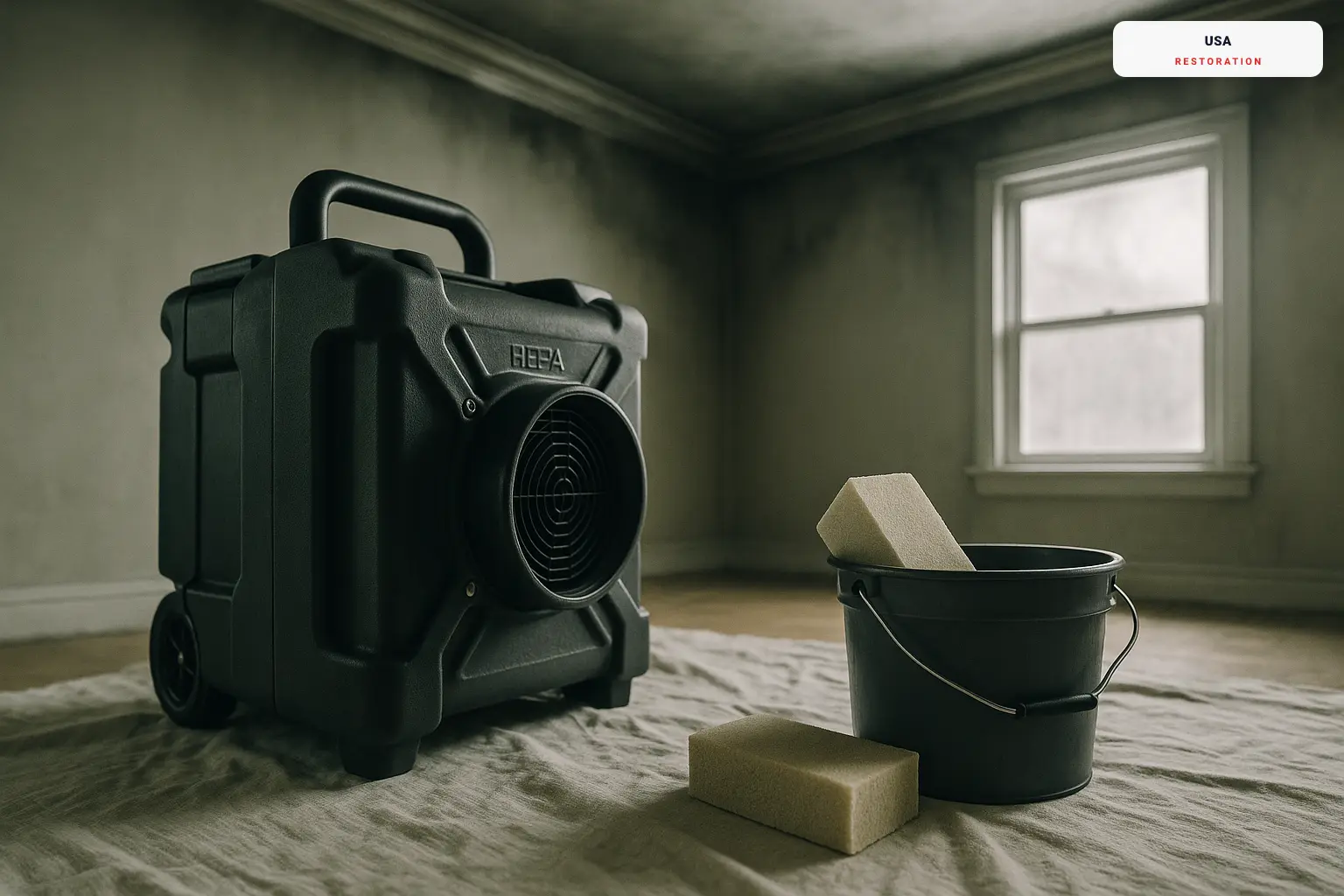
The on-site discipline matters more than the equipment list. Source-control before anything else. Photo + moisture documentation before equipment goes down. Equipment sized to the actual loss, not the truck capacity. Daily monitoring with logged readings until every monitored substrate hits dry-standard. Reconstruction on the back end with the same crew, scoped from the same documented Xactimate. End-to-end accountability through one team and one contract.
Working with adjusters on Harrison losses
Insurance documentation on Hudson County losses gets handled the way the major carriers actually want it: photos of every wet substrate before equipment deploys, moisture readings logged daily against a labeled building diagram, line-item Xactimate for both mitigation phase and reconstruction phase, and a written cause-of-loss narrative that frames the event correctly for the policy. Direct carrier billing once authorization is on file means you are not floating mitigation costs while the claim works through adjusting.